Why Your Sliding Glass Door Is Suddenly Hard to Open (and What's Actually Causing It)
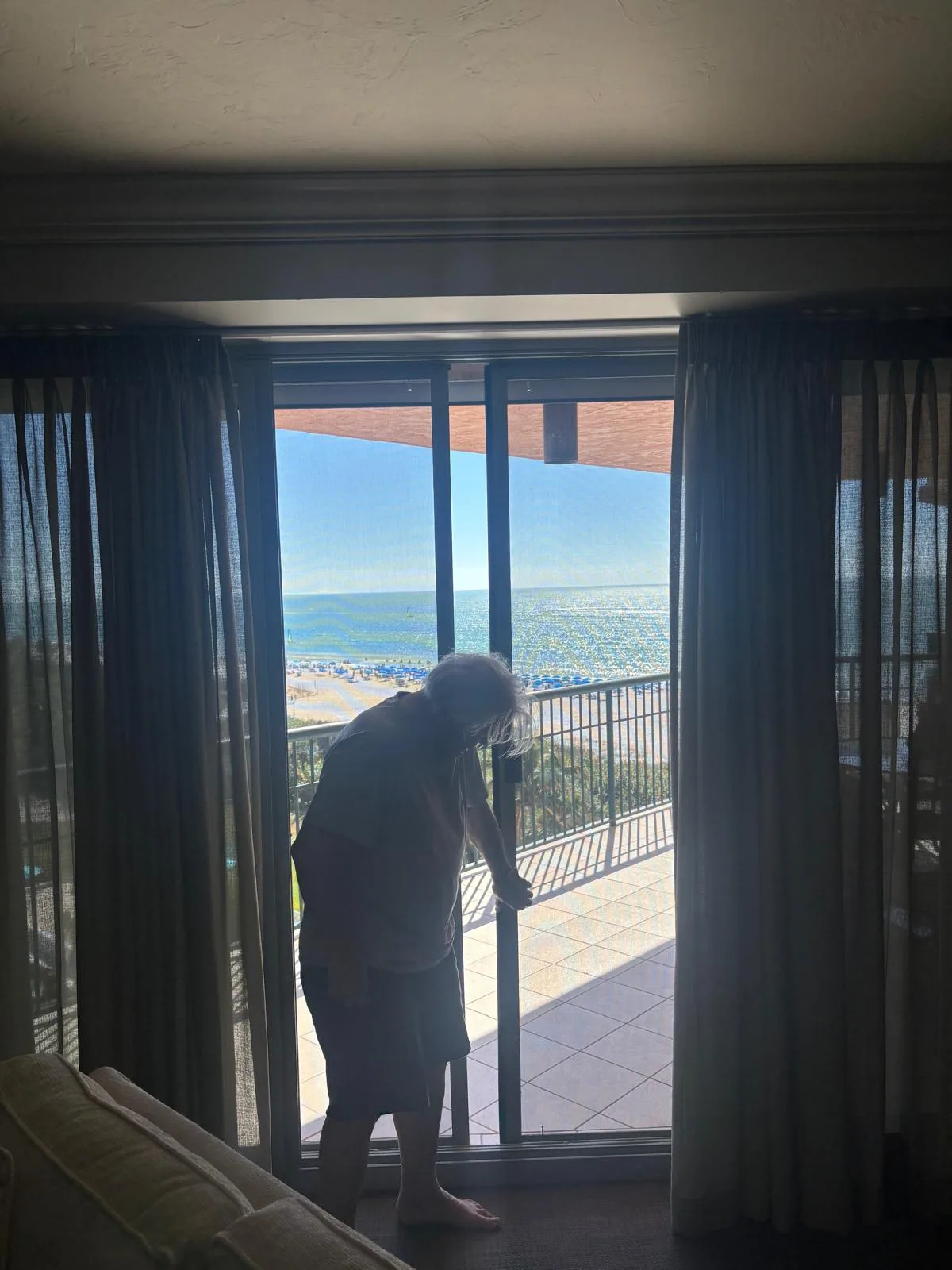
You used to slide it with one finger. Now you brace a shoulder against it, lean back, and yank. Maybe it screeches partway, stops dead, and forces a second heave to get it moving. A sliding glass door that has turned heavy, stiff, or hard to pull is one of the most common complaints homeowners have, and the frustrating part is that nothing looks broken. The glass is fine. The frame is straight. It just refuses to glide.
The reason is almost always hidden at the very bottom of the door, in the inch of hardware nobody ever sees: the rollers and the track they ride on. Understanding what is happening down there tells you why the door got hard to open, and what it takes to make it light again.
What "hard to open" usually means underneath
A sliding door does not glide on the track itself. It rides on two small wheels, called rollers, tucked into the bottom rail of the panel. When those rollers spin freely, the whole weight of the glass floats on them and the door moves with almost no effort. When they stop spinning, the door starts dragging its own weight across the metal track instead of rolling over it. That drag is exactly the heaviness you feel.
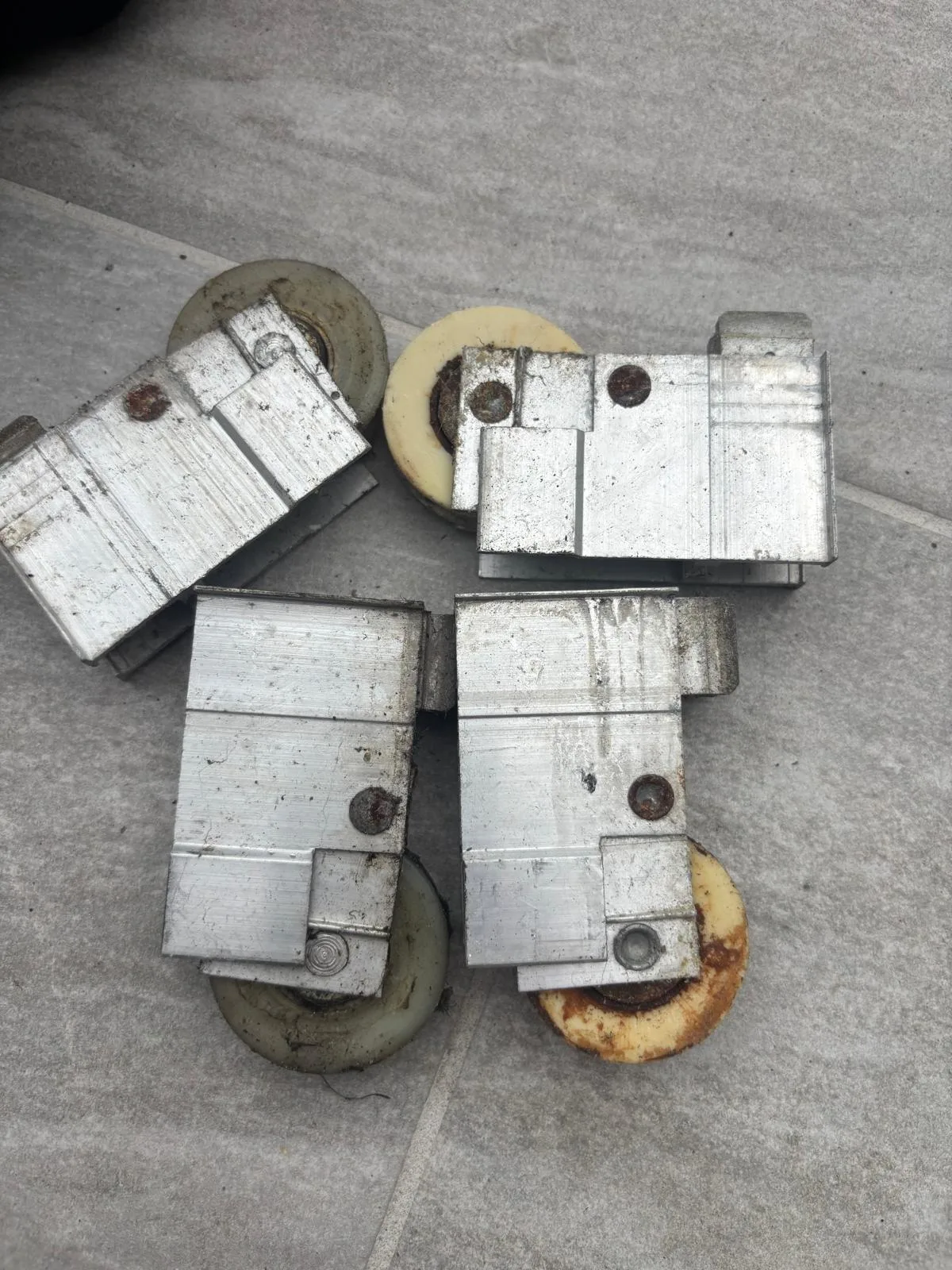
Rollers fail in a few predictable ways. The nylon wheels crack or flatten after years of load. The bearings inside seize up with grit and corrosion, especially in coastal and humid climates where salt air eats hardware fast. Sometimes a wheel locks completely and the door is now scraping along on a dead chunk of plastic. People often describe this stage as the door feeling like it weighs a hundred pounds, because functionally it now does.
When it's the track, not the rollers
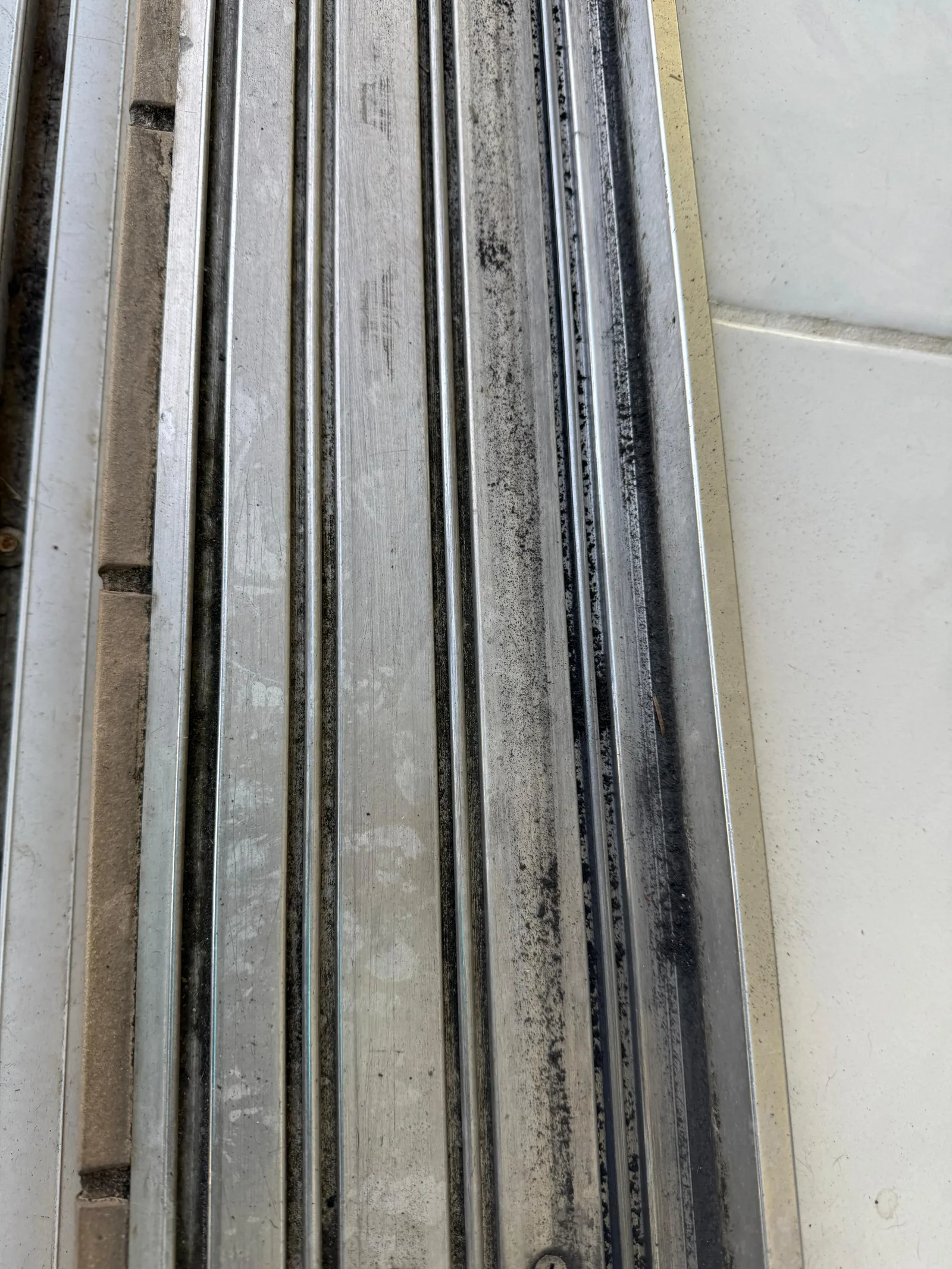
Sometimes the rollers are fine and the track is the villain. The bottom track is a shallow channel, and it collects everything: dirt, sand, pet hair, dead bugs, hardened grime. Packed-in debris physically blocks the wheels and creates that gritty, grinding resistance. A track this dirty can make a perfectly good roller feel shot.
Tracks also bend. A heavy door, years of impact, or someone stepping in the channel can flatten or kink the metal lip the rollers ride on. Once the track is bent, the door binds at that spot every single pass, no matter how new the rollers are. You will often feel this as a door that opens fine for the first foot, then hits a wall and gets hard right at one point.
So how do you tell which one you have? A quick field test: lift the door slightly by the handle as you slide it. If it suddenly glides easily when you take weight off the bottom, your rollers are the problem. If it still binds at a specific spot even when lifted, suspect the track. Most stiff-door calls turn out to be some blend of both, which is why the two repairs are so often done together.
The alignment factor
There is a third culprit worth knowing about. Over time a panel can sag or sit slightly out of level, so it leans into one side of the frame and rubs as it travels. Most doors have adjustment screws at the bottom of the panel that raise or lower each roller to bring the door back to plumb. A door that is dragging because it is out of adjustment can sometimes be corrected without replacing a single part, which is why a real diagnosis matters before anyone starts quoting new hardware.
A few questions homeowners ask
Can a heavy sliding door be made easy to open again?
Almost always, yes. Once the worn rollers are swapped for fresh ones and the track is cleaned or repaired, a door that took two hands typically goes back to one-finger glide. The glass and frame rarely need touching.
Do I need both the rollers and the track done, or just one?
It depends on what the diagnosis finds. Sometimes a deep track cleaning and a roller swap fixes it completely. If the track is bent or worn through, that section may need recapping or repair so the new rollers have a smooth surface to run on. The lift test above is a good first clue, but binding doors are easy to misread, so it is worth having a technician take a look before buying parts.
Can the rollers be replaced without removing the whole door?
Usually the panel does have to be lifted out of the frame to reach and swap the rollers, but for an experienced tech that is a routine part of the job, not a demolition.
What the fix typically costs
Pricing varies by door type, panel count, and local market, but as a general guide: roller replacement tends to run around $199 to $399 per panel, with two panels done together often landing in the $450 to $750 range. Track cleaning and capping commonly falls around $250 to $550 depending on length, and track repaired by the linear foot is frequently quoted near $25 per foot. Many companies charge a service or measurement fee, often $150 to $175, sometimes credited back if you proceed.
Set against the $10,000 to $15,000 it costs to install a brand-new impact slider, fixing the rollers and track to get that effortless glide back is the obvious value move for a door that is simply hard to open.
Pricing at a glance
| Service | Typical range |
|---|---|
| Roller replacement (per panel) | $199 - $399 |
| Two panels done together | $450 - $750 |
| Track cleaning + recapping | $250 - $550 |
| Lock repair (bundled) | $175 - $275 |
| Service / measurement fee | $150 - $175 |
| Type | Best for | Lifespan | Cost | Notes |
|---|---|---|---|---|
| Nylon | Standard, lighter doors | Shorter in coastal salt air | $ | Quiet and inexpensive; can flat-spot over time |
| Steel / stainless | Heavy & impact doors | Long, corrosion-resistant | $$ | Strongest choice near the ocean |
| Tandem (dual-wheel) | Heavy, multi-panel doors | Long, spreads the load | $$ | Smoothest glide for big panels |
Our Port St. Lucie location
Live Google Business Profile embed for our Port St. Lucie location. Also serving the Treasure Coast from Stuart · Fort Pierce · Vero Beach · Jensen Beach.